


Ibeji Igbomina 2
Omu Aran - 28cm
Dans le vaste panthéon des représentations sculpturales des Ibeji, rares sont les styles qui, par leur prégnance esthétique et leur récurrence dans les plus prestigieuses collections et expositions dédiées aux arts yoruba, s’imposent avec autant d’évidence que celui du village d’Omu Aran. Véritable archétype prisé des connaisseurs, cette école stylistique incarne l’apogée de l’art des Ibeji, concentrant en ses formes les canons les plus recherchés par les amateurs éclairés.
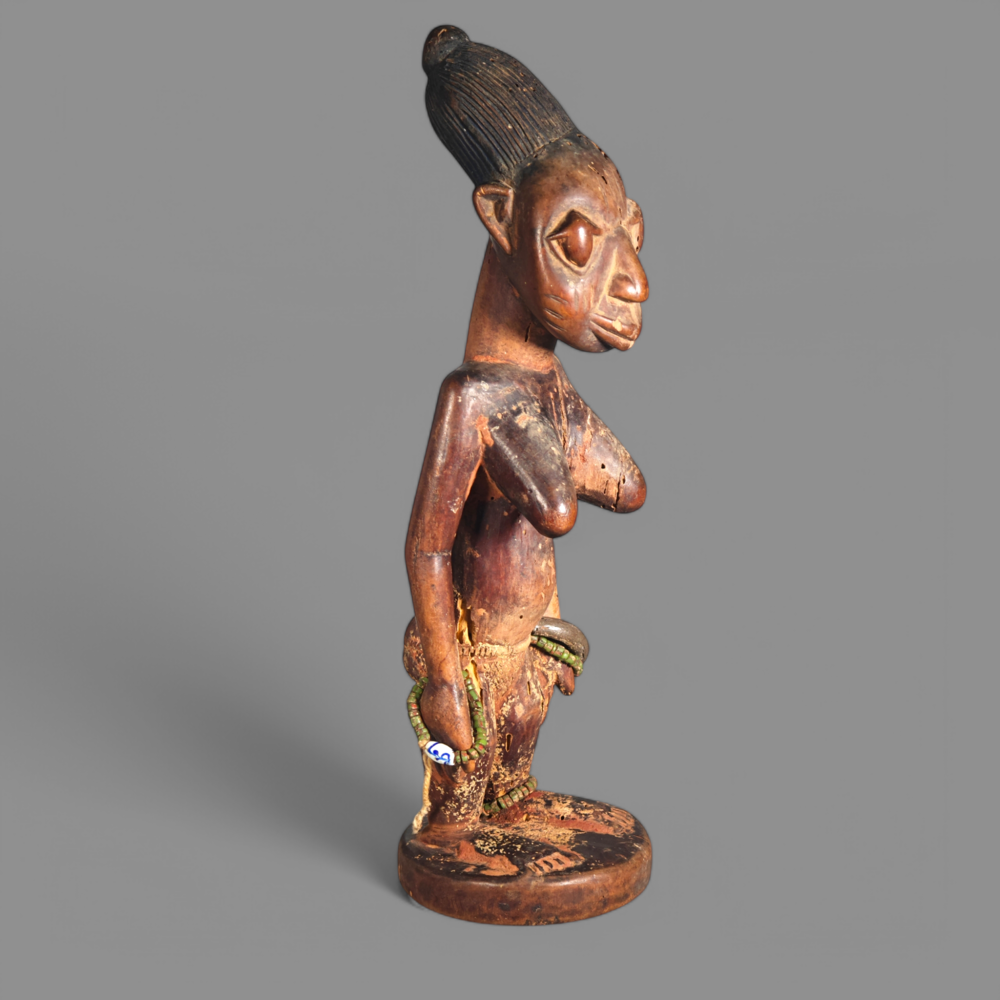
L’exemplaire présenté ici, daté du XIXᵉ siècle et d’une ancienneté remarquable, illustre avec une éloquence saisissante les caractéristiques distinctives de cet atelier d’exception : des yeux en diamant , une bouche stylisant un bec d’oiseau, des bras délicatement semi-détachés du corps et une imposante coiffe étirée vers le ciel, conférant à l’ensemble une dynamique sculpturale d’une rare intensité. Un chef-d’œuvre absolu, essentiel pour toute collection rigoureusement constituée.
Des photographies haute définition, un rapport détaillé de provenance ainsi que le prix de cette pièce d’exception pourront être communiqués sur simple requête.
In the vast pantheon of sculptural representations of the Ibeji, few styles assert themselves with such aesthetic prominence and recurrence in the most prestigious collections and exhibitions dedicated to Yoruba art as that of the Omu Aran workshop. A true archetype cherished by connoisseurs, this stylistic school embodies the pinnacle of Ibeji artistry, concentrating in its forms the most sought-after canons among discerning collectors.
The present specimen, dating from the 19th century and of remarkable antiquity, eloquently illustrates the distinctive characteristics of this exceptional workshop: deeply inset diamond-shaped eyes, a beak-like mouth, arms delicately detached from the torso, and an imposing headdress stretching skyward, endowing the whole with a sculptural dynamism of rare intensity. An absolute masterpiece, essential to any rigorously assembled collection.
High-definition photographs, a detailed provenance report, and the price of this exceptional piece can be provided upon request.
Nínú àyà àwọn Ìbejì tí ó gbooro, díẹ̀ nínú àwọn àṣà ara tí ó ní ipa gígà àti tí ó ṣàkóso nínú àwòrán àyíká àti àwọn àkójọpọ̀ ayélujára, le ṣàwárí bi ilé iṣẹ́ Omu Aran ti ṣe mú kí ara rẹ̀ di àlàyé. Àṣà oníṣàánú yìí, tí àwọn amòye mọ̀rì, ni àfiṣàànú ti Ìbejì, nípa mímú gbogbo àwọn ìlànà tí wọ́n bọ̀ wò gẹ́gẹ́ bí ohun tí àwọn akójọpọ̀ ṣojú.
Àpẹẹrẹ yìí, tí ó dá ní orundún kẹrìndínlógún (19th century) tí ó sì jẹ́ àtimọ̀lé nlanla, fi hàn pẹ̀lú àsọjáde gíga àwọn àbùdá pàtàkì tí ilé iṣẹ́ yìí ṣe aláyọ: ojú onírín díámọ̀ndì tí a fi sí jinlẹ̀, ẹnu tí ó dà bí beeki ẹyẹ, àwọn apá tí ó yà kúrò lára, àti irun gíga tí ó ń jókòó sí òkè, tí ó mú kí ara gbogbo dún láti rí, pẹ̀lú ìyànjú gíga tí a fi hàn. Ohun èlò àgbàyanu, tí ó yẹ kí ó wà nínú èyíkéyìí àkójọpọ̀ tí a ṣàtẹ̀wò pẹ̀lú ìtọ́jú.
Àwọn àwòrán gíga HD, ìtàn àkọ́kọ́ pẹ̀lú ìbùdó rẹ̀, àti owó tí a nṣe le fi ránṣẹ́ sí ọ lórí ìbéèrè kan ṣoṣo.